
Puffback & Soot Cleaning in Locust Valley, NY
Locust Valley holds some of Nassau's oldest standing housing — 18th-century farmhouses, converted stables, cedar-shingled colonials — and heating systems retrofitted into structures that never anticipated them. Old flues, long retrofit runs, and horsehair-plaster interiors make this hamlet's puffbacks preservation problems as much as cleaning problems: the soot travels through balloon framing modern homes don't have, and the surfaces it lands on can't take modern scrubbing. We clean these houses the way their builders would want — tested methods, dry media, and patience. Early calls matter doubly here, because what sets into horsehair plaster rarely comes back out.
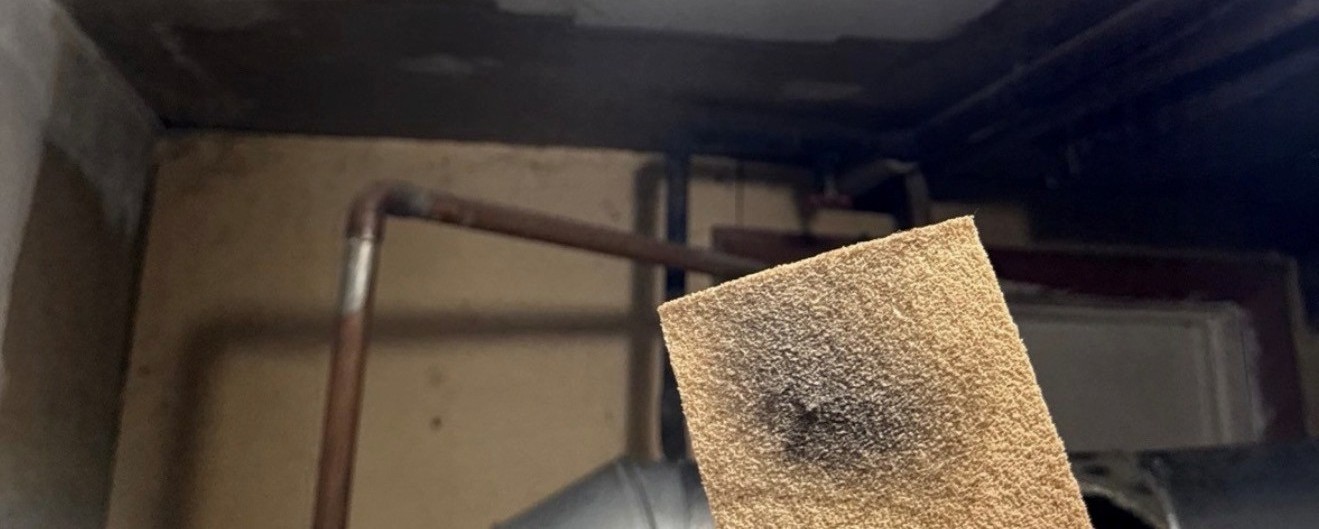
Our antique-housing protocol runs: thermal and visual tracing of the plume's path, HEPA extraction, dry-chemical sponge work across plaster and early millwork, degreasing only on proven finishes, distribution cleaning matched to the retrofit, and odor treatment that reaches the wall cavities old framing exposes. All Island Restoration brings three generations of family practice, IICRC certification, and Nassau License #H0306780000 to the valley. Puffback claims are commonly covered; estimates are free, documentation is carrier-grade, and billing is direct. Textiles restore in-house through our own dry cleaning operation. Call 877-AIR-8070 at any hour, any day.
Water, fire, mold or asbestos emergency? We answer 24/7 and bill your insurance directly.
877-AIR-8070Request a Free QuoteWhat's Behind a Puffback in Locust Valley?
Inside the combustion chamber, a puffback is a timing failure — oil that should have burned on arrival accumulates, then ignites in one pulse that drives soot out of the system and into the living space. In Locust Valley, where oil heat remains common, the pattern peaks in the first cold weeks of the season, when burners come back online after months idle.
A misfiring burner rarely misfires once. Homes we clean in Locust Valley often show layers: an old light dusting under this week's heavy one. Hard starts, rumbles, and odor near the unit are the early warnings worth acting on.
Where the Soot Ends Up in a Locust Valley Home
In a ducted Locust Valley home, the furnace is both the source and the delivery system — one puffback can register in every room before anyone reaches the basement stairs. Radiator and baseboard homes keep more of it near the unit, though convection still lifts the finest particles through the house.
What makes puffback soot worse than fireplace soot is the oil in it: it smears instead of dusting off, and it keeps staining as long as it sits. The electrically charged particles seek out corners, ceiling angles, and electronics, so the damage map rarely matches what seems logical.
The Cleanup, Step by Step
Our Locust Valley crews work the proven order: document everything for the claim, stabilize the air with HEPA machines, dry-sponge the oily film off walls and ceilings before anything wet touches them, then clean the ductwork and burner area so the system can't redistribute what's left.
Contents get triaged — cleaned on site, processed through our textile operation, or documented as losses — and odor is chased to its source rather than sprayed over. The finished job is walked through room by room against the first day's photos.
Before the Crew Arrives: First Moves
Turn the system off and open nothing up — no fans, no vacuuming, no test wipes. Puffback soot responds beautifully to professional dry cleaning methods and terribly to household ones, and the difference is often the whole repaint budget in a Locust Valley house.
Call your heating tech so the misfire gets fixed, and call 877-AIR-8070 so the cleanup and the insurance file start together. Assessment is free at any hour, and the earlier the photos, the cleaner the claim.
The Valley's Antique Blocks and Estate Lanes
Our coverage spans the 11560 village district and the estate country around it, where the housing's age writes the maintenance rules: burner service every fall, flue inspection on every original chimney, and immediate attention to any new startup noise. Old houses forgive slow decay and punish sudden events — our job is making the sudden ones reversible. These references complete the local file.
- Locust Valley Library — The library anchors a village whose buildings reward preservation-grade care.
- Bailey Arboretum — The arboretum's springs mark the water table under these old foundations.
- Village of Lattingtown — Lattingtown's estate lanes share the retrofit heating and our daily route.
- Village of Matinecock — Matinecock's horse-country properties bring us barn and outbuilding losses too.
- Town of Oyster Bay — Town storm services cover the roads; the antique interiors are ours.
Frequently Asked Questions
Can an 18th-century interior really be cleaned of oil soot?
Usually — dry-chemical sponges were made for surfaces that can't take liquid, and unsmeared film lifts from old plaster and early paint. The houses that end up repainted are the ones someone wiped first.
Why does the smell seem to live in the walls?
Balloon framing — open cavities carried the plume between floors, and odor settles there. Our treatment addresses those pathways; surface cleaning alone never fully clears an antique house.
Does insurance cover a historic home's loss?
Commonly yes — puffbacks are sudden accidental damage regardless of the house's age. Documentation matters more with irreplaceable finishes, and ours meets that bar with direct billing.
Our outbuildings have their own heaters. Covered too?
We clean their losses alongside the main house and flag their condition — retrofit heaters in barns and studios are frequent quiet offenders.
What's the right prevention for an antique system?
Fall burner service plus a flue inspection — original chimneys narrow with age and are a leading misfire trigger in housing this old. The pair, done annually, keeps our number in the drawer.
This page is part of our puffback service area: Puffback & Soot Cleaning on Long Island · Water Damage Cleanup in Locust Valley, NY · Fire & Smoke Damage Restoration in Locust Valley, NY · Asbestos Abatement in Locust Valley, NY · Commercial Restoration in Locust Valley, NY.