Fire & Smoke Damage Restoration in Sag Harbor, NY
Fire in Sag Harbor's historic density is the East End's highest-stakes recovery — Federal and Greek Revival houses shoulder to shoulder on tight lanes, where one structure's loss threatens its neighbors and every interior answers to preservation standards — and our crews run it accordingly: adjacency assessed immediately, dry-first methods throughout, conservator referrals where restoration ends, and repairs in kind by hands that match old work. The village's part-time majority adds caretaker-first discovery; remote documentation serves owners anywhere. What gets saved is usually decided in the first forty-eight hours. A single call brings mitigation, cleaning, odor work, and the rebuild under one roof.
One firm runs each loss: antique-aware enclosure, stabilization and monitored drying, preservation-grade cleaning, cavity odor elimination, contents and vintage-textile restoration through our own operations, and in-kind rebuild — three generations, Suffolk License #50966-H, IICRC certified. Fire, smoke, and suppression water are one covered loss, primary or seasonal; direct billing runs throughout. Call 877-AIR-8070 — answered every hour of the year. The fire is the event; the smoke is the damage — and the smoke responds to speed. Early documentation also makes the insurance claim cleaner from its first photo. Each hour of delay moves another surface from the cleanable column to the replace column.
Water, fire, mold or asbestos emergency? We answer 24/7 and bill your insurance directly.
877-AIR-8070Request a Free QuoteAfter the Flames: What Smoke Does Next
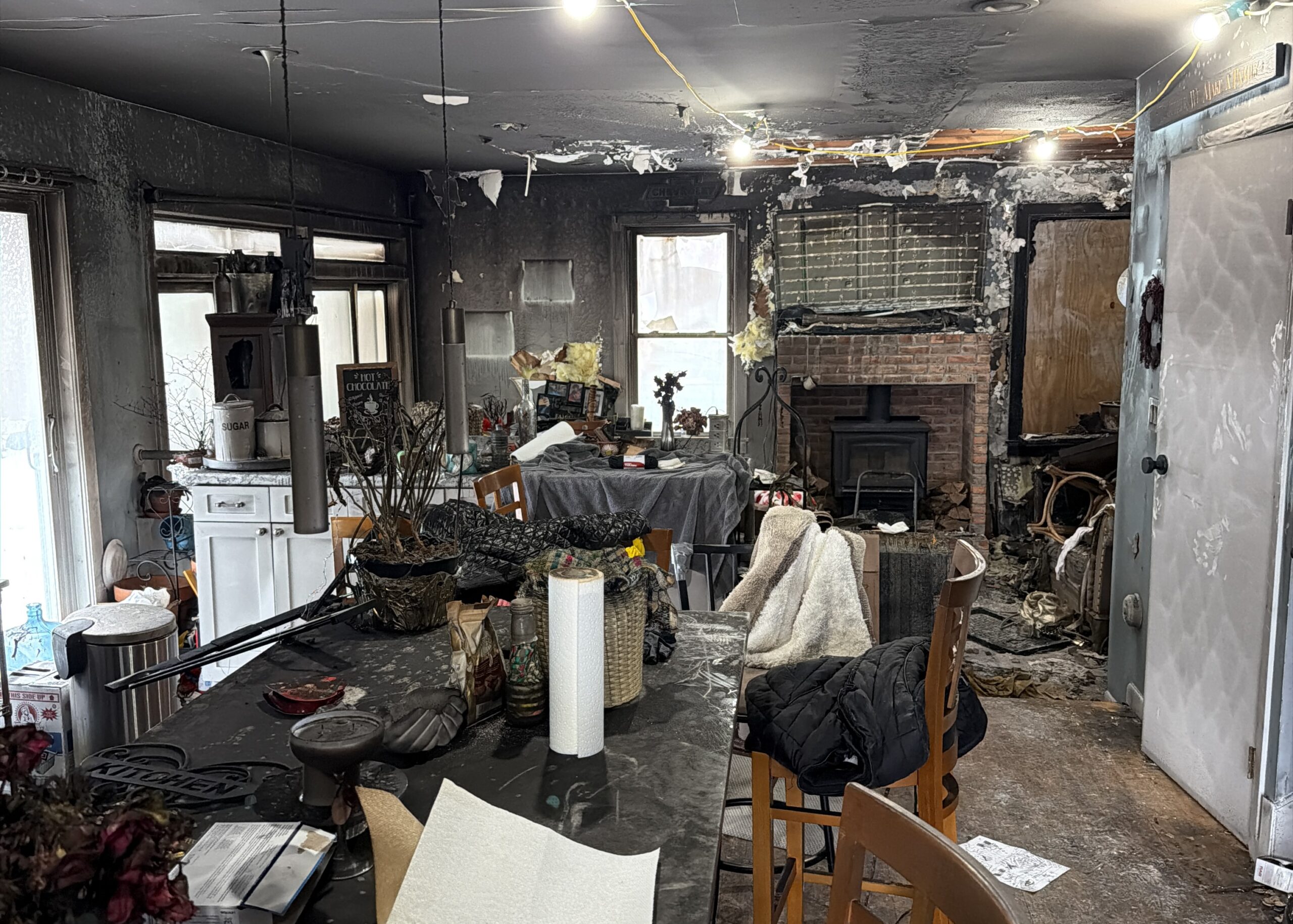
The smoke plume from even a small Sag Harbor fire travels the whole house through stairwells, ducts, and wall cavities, and its residue is corrosive from the moment it lands. Electronics, plumbing fixtures, and window glass start showing acid damage within days when stabilization doesn't happen.
Not all soot is equal: fast fires leave dry powder, smoldering fires leave greasy film, kitchen fires leave near-invisible protein residue with the worst odor of the three. Typing the soot correctly on day one is what makes the rest of the cleanup work.
Our Fire Restoration Process in Sag Harbor
The order is fixed: secure the structure first — board-up and roof tarping, around the clock — then stabilize the air with HEPA filtration, identify the smoke type, and clean accordingly, dry methods before wet. Water from the firefighting gets extracted alongside the soot work, because a Sag Harbor fire loss is almost always a water loss too.
Odor gets treated at the source — not masked — and smoke-struck clothing, curtains, and fabrics route through our own textile and dry-cleaning operation. Then our own reconstruction crews rebuild what the flames actually took, under the same contract and claim file, from the first photo to the final coat of paint.
Why Speed Matters More Than Anything
Each hour of delay moves another surface from the cleanable column to the replace column. Smoke residue etches metal and glass, yellows paint and plastics, and bonds deeper into porous surfaces the longer it sits — which is why our Sag Harbor fire crews treat stabilization as an emergency even when the fire was small.
Delay also compounds the water side: firefighting water that sits becomes a mold problem layered onto a fire problem, turning one claim into two scopes. Same-day extraction keeps it one.
Before Cleanup Starts: Do This
Three rules protect a Sag Harbor home after the trucks leave: don't wipe anything (soot sets under a cloth), don't run the heat or AC (the ducts will spread the residue), and don't throw anything away yet (the claim needs to see it). Photograph freely — early pictures only help.
Make the call to 877-AIR-8070 the same day. Board-up, tarping, and air stabilization run 24/7, the estimate is free, and the insurance file starts with our first walkthrough.
The Old Port After a Fire
Coverage spans the 11963 village through enclosure, preservation-grade cleanup, and matching rebuild — wharf buildings coordinated, the district's standards honored. These references complete the territory. The estimate is free, the line never closes, and the finished work is walked through room by room. Free estimates, 24/7 board-up, and a documented final inspection come standard. A free assessment starts it; a room-by-room documented walk-through finishes it.
- Sag Harbor, New York — Background on the village we serve.
- Sag Harbor Whaling Museum — The whaling museum keeps the era these interiors come from.
- Old Whaler's Church — The wharf's buildings mix galleries and apartments over shared systems.
- SANS Historic District — Bridgehampton's lanes share our route.
Frequently Asked Questions
Historic-district loss — the standard?
Preservation-grade throughout: dry-first, test-patched, in-kind, conservator-referred.
Tight-lane neighbors?
Adjacency assessed immediately — the density demands it.
Wharf building?
Each policy documented, commercial overnight, residential contained.
Insurance?
Covered, primary or seasonal — billed directly.
Rebuild?
In kind, by our own crews.
This page is part of our fire restoration service area: Fire & Smoke Damage Restoration on Long Island · Water Damage Cleanup in Sag Harbor, NY · Puffback & Soot Cleaning in Sag Harbor, NY · Commercial Restoration in Sag Harbor, NY.