Fire & Smoke Damage Restoration in Albertson, NY
Albertson's postwar capes carry the fire risks of their era — original wiring working harder than its designers planned, basement utility rooms crowded with decades of storage, and kitchens renovated around 1950s circuits — and when a fire starts, the hamlet's compact floor plans smoke end to end in minutes. Our crews arrive with board-up first and judgment second: these houses' plaster walls and oak floors usually survive smoke beautifully when cleaned correctly, and the difference between restoration and gut-renovation here is almost always the speed and order of the first week's work.
That order is fixed: secure the structure, stabilize the environment with HEPA filtration, identify the smoke type, clean accordingly — dry sponges before anything wet — then treat odor at the source and rebuild what the flames actually took. All Island Restoration runs the whole sequence as one firm: three generations, Nassau License #H0306780000, IICRC certified technicians, our own textile operation for smoke-filmed clothing, and reconstruction crews who finish what mitigation starts. Insurance documentation is carrier-grade from day one, and billing goes directly to your company. Call 877-AIR-8070 whenever it happens — the line answers every hour of the year.
Water, fire, mold or asbestos emergency? We answer 24/7 and bill your insurance directly.
877-AIR-8070Request a Free QuoteAfter the Flames: What Smoke Does Next
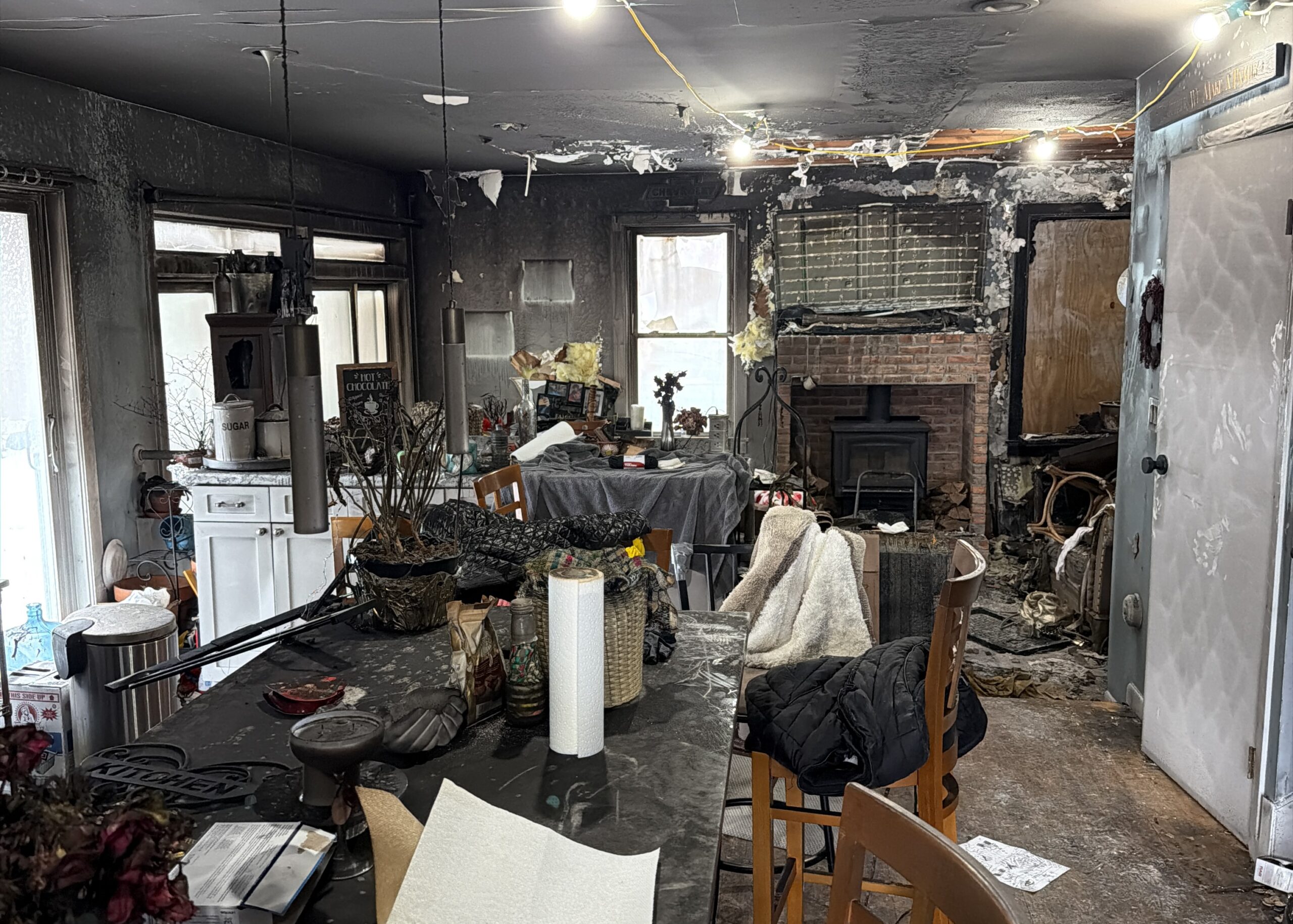
The smoke plume from even a small Albertson fire travels the whole house through stairwells, ducts, and wall cavities, and its residue is corrosive from the moment it lands. Electronics, plumbing fixtures, and window glass start showing acid damage within days when stabilization doesn't happen.
Not all soot is equal: fast fires leave dry powder, smoldering fires leave greasy film, kitchen fires leave near-invisible protein residue with the worst odor of the three. Typing the soot correctly on day one is what makes the rest of the cleanup work.
From Board-Up to Rebuild: The Process
We work a Albertson fire in layers: secure (board-up, tarping, fencing where needed), document (the carrier-grade photo file starts before cleanup), stabilize (HEPA air scrubbing, water extraction), clean (methods matched to the soot type), deodorize (at the source), and rebuild (our own crews, same claim file).
That single-firm structure matters most at the handoffs — there's no gap between the mitigation ending and the rebuild starting, and no second contractor relearning the loss. Three generations, IICRC certification, and direct insurance billing carry it end to end.
Why the First 48 Hours Decide a Albertson Fire Claim
What gets saved after a fire is usually decided in the first forty-eight hours. Acid residue works continuously: surfaces that wipe clean on day one need refinishing by day seven and replacement by week three. In Albertson, the difference between a fast stabilization and a slow one routinely runs to thousands of dollars of scope.
Fast response also protects the claim itself — early photos document the loss before weather, traffic, or well-meaning cleanup attempts muddy the picture, and carriers settle faster on files that start clean.
Just Had a Fire in Albertson? First Steps
Don't re-enter until the fire department clears the structure, and once you're in, resist the urge to start wiping — smoke residue smears, and the wrong first touch sets stains that would have cleaned. Don't run the HVAC system; it will redistribute soot through every room it serves.
Then call 877-AIR-8070 from your Albertson home: board-up and stabilization dispatch around the clock, the assessment is free, and we document everything for your carrier and bill the insurance directly.
Albertson and the Willets Corridor After a Fire
We cover the 11507 grid and its neighbors — Searingtown, Roslyn Heights, Williston Park — through every stage of a fire loss, from the kitchen fires that dominate the hamlet's calls to the electrical and heating-related fires its housing age produces. The local references below complete the file for any Albertson household putting a home back together. Assessment costs nothing at any hour, and no job closes before the final inspection says so.
- Clark Botanic Garden — Clark Botanic Garden anchors the neighborhood our board-up crews reach fastest.
- Town of North Hempstead — The town's inspectors see the same postwar wiring our rebuild crews replace.
- Searingtown — Searingtown shares the housing stock and the same restoration response.
- Roslyn Heights — Roslyn Heights brings us the same kitchen-fire season every year.
- Williston Park — Williston Park's village homes get identical plaster-saving smoke care.
Frequently Asked Questions
Our kitchen fire is out but the cabinets and walls are black. Replace or clean?
Assessment answers it honestly — much of what looks lost to smoke cleans back, while heat-damaged surfaces near the fire usually need replacement. We scope both and your carrier sees the documentation for each.
Is the house safe to stay in?
That depends on smoke levels, utilities, and structural condition — we assess all three on arrival and tell you plainly. When a stay-out is needed, we coordinate the timeline with your adjuster.
Does insurance cover all of this?
Fire and its smoke are core homeowners coverage. We document, meet the adjuster, and bill the carrier directly through the rebuild.
What about the smell?
Odor gets treated, not masked — source removal, duct and cavity treatment, neutralization. A house that still smells of smoke wasn't finished.
How long until we're back to normal?
The honest answer comes from the scope — a smoke-only loss moves quickly; structural rebuilds take longer. Either way one firm runs the whole schedule and you always know where it stands.
This page is part of our fire restoration service area: Fire & Smoke Damage Restoration on Long Island · Water Damage Cleanup in Albertson, NY · Puffback & Soot Cleaning in Albertson, NY · Asbestos Abatement in Albertson, NY · Commercial Restoration in Albertson, NY.